Why Your Business Generates Thousands of Signals (And You're Missing Most of Them)

Every operational business generates thousands of signals per day — vendor compliance changes, revenue dips, call patterns, customer complaints, schedule shifts, payment events. Most of them never reach the leader because they're scattered across tools that don't talk to each other, surface only when someone happens to look, and bury the few important signals under the many routine ones. The fix is signal detection architecture, not more dashboards.
What Counts as a Signal
A signal is any operational event worth noticing — something that suggests action might be required or a pattern worth understanding. Not every event is a signal. A customer paid an invoice on time isn't a signal. A customer paid an invoice 47 days late, and three other customers from the same region are also aging past 30 days, is a signal.
An operational business of any meaningful size generates thousands of these per day:
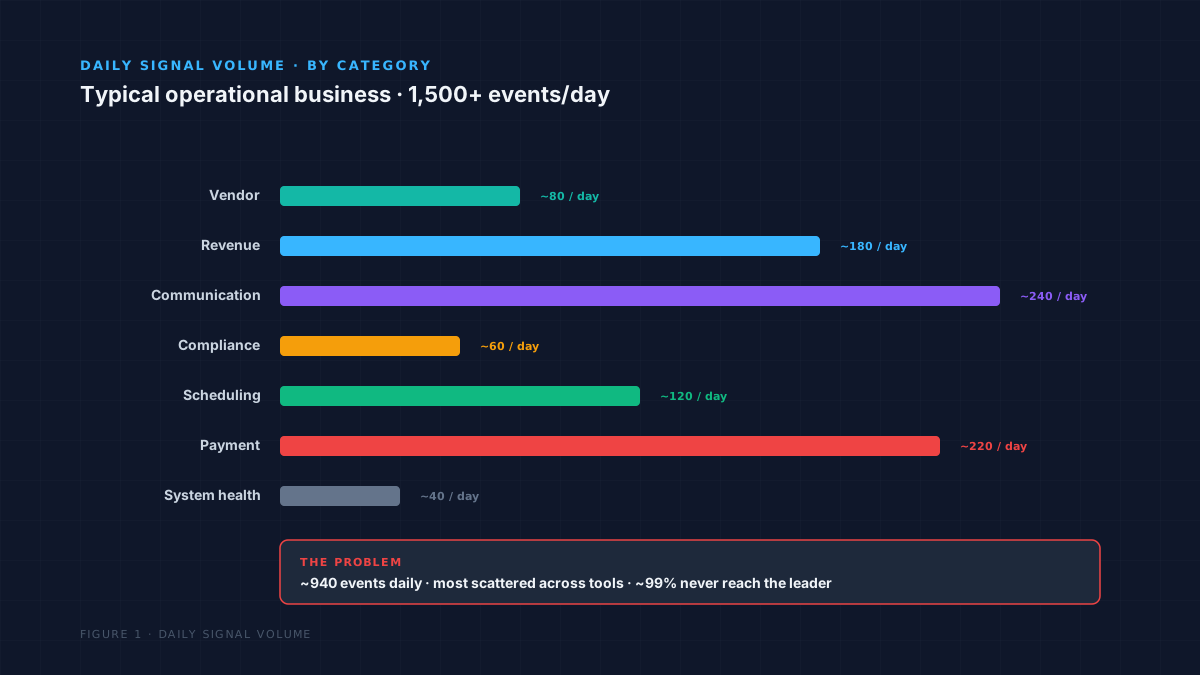
- Vendor signals: insurance certificates approaching expiration, license renewals due, compliance status changes
- Revenue signals: anomalous transaction amounts, day-over-day shifts, customer payment behavior changes
- Communication signals: missed calls, call sentiment shifts, response time changes, message clusters
- Compliance signals: document expirations, audit triggers, regulatory deadlines approaching
- Scheduling signals: appointment reschedules, capacity utilization shifts, conflicting bookings
- Payment signals: AR aging, partial payments, refund clusters, chargeback patterns
- System health signals: integration failures, API errors, data sync delays
Why Most Signals Get Missed
Three structural reasons signals get lost:
1. They're scattered across tools
Vendor signals live in the vendor portal. Revenue signals live in accounting. Call signals live in the phone system. Each tool only sees its own slice. Nobody is watching the seam between tools where the highest-value signals actually live.
2. They're surfaced only on request
Dashboards require you to come look. Reports require you to run them. Most signals get lost because the system waits for someone to ask the right question at the right time — and most people are too busy to ask.
3. They're buried in routine noise
Without anomaly detection, every event looks the same. The system doesn't distinguish between "customer paid invoice" (routine) and "customer paid invoice 47 days late while three others in the region are aging" (signal). The few important signals get drowned in the many routine ones.
What Signal Detection Architecture Looks Like
A real signal detection layer does three things:
- Captures every event across every system into a unified event stream — the event bus.
- Distinguishes routine from notable through rule-based and AI correlation that knows what's normal in your business.
- Pushes signals to the right person through the channels they already use — email, SMS, Slack, Teams — instead of waiting for them to check a dashboard.
The leader stops asking 'is anything wrong' and starts being told 'this needs your attention' — only when it actually does. The routine 99% stays quiet. The notable 1% gets the leader's actual focus.
The Compounding Effect
Most leaders don't realize what they're missing because the missing isn't visible. Customers churn for reasons that would have been visible 60 days earlier if anyone had been watching. Compliance exposure builds for weeks before becoming a liability event. Revenue drift accumulates before anyone notices the slope changed.
Signal detection architecture catches these moments early — when they're cheap to address. By the time a signal becomes a crisis, the cost of acting has multiplied. The architecture doesn't create new information. It surfaces information that was already there, while it still matters.
How XeedlyAI Builds Signal Detection
Every Xeedly intelligence platform deployment includes signal detection as a core capability. Event bus captures every operational event. Signal engine (rule-based + AI correlation) distinguishes routine from notable. Multi-channel delivery pushes signals to the people who can act on them. Five live deployments across multi-unit restaurants, HOA management, property management, real estate investing, and the Xeedly platform. Standup is 2–4 weeks for the core platform plus 1–2 weeks per integration.
Questions, answered.
- What are operational signals in a business?
- An operational signal is any event worth noticing — vendor compliance lapse, revenue anomaly, missed call cluster, customer complaint pattern, scheduling conflict, payment aging. Not every event is a signal; routine activity is just data. A signal is data that suggests action might be required or a pattern worth understanding.
- How many signals does a typical operational business generate per day?
- Thousands. A mid-sized HOA management company generates 500–1,500 daily across vendor, document, payment, and communication events. A multi-unit restaurant generates 2,000+ across POS, labor, voice, and review channels. A property investment firm generates hundreds across deal pipeline and market events. The volume isn't the problem — the filtering is.
- Why do most signals get missed?
- Three structural reasons: signals are scattered across multiple tools that don't talk to each other, they're surfaced only on request (dashboards require you to look), and they're buried in routine noise without anomaly detection to distinguish notable from normal. Even diligent leaders miss most signals because the architecture doesn't surface them.
- What's the difference between a signal and a metric?
- A metric is a number you can look up. A signal is a notable change in a metric (or pattern across metrics) that warrants attention. Dashboards display metrics. Signal detection layers display signals — only the ones that need a decision.
- How does signal detection architecture work?
- Three components: an event bus that captures every operational event across systems, a signal engine that distinguishes routine from notable through rule-based and AI correlation, and a delivery layer that pushes signals to the right people through email, SMS, Slack, or Teams. Together they surface what needs attention before it becomes a crisis.
Ask anything about this briefing.
I've read it. I can synthesize, expand on any section, or point you to related briefings.
Surface the signals you're already generating
Tell us which systems you run. We'll map the signal types that would emerge from a unified signal detection layer for your business — and which would have caught issues from your last 90 days.
More from PRINCIPAL-INTELLIGENCE
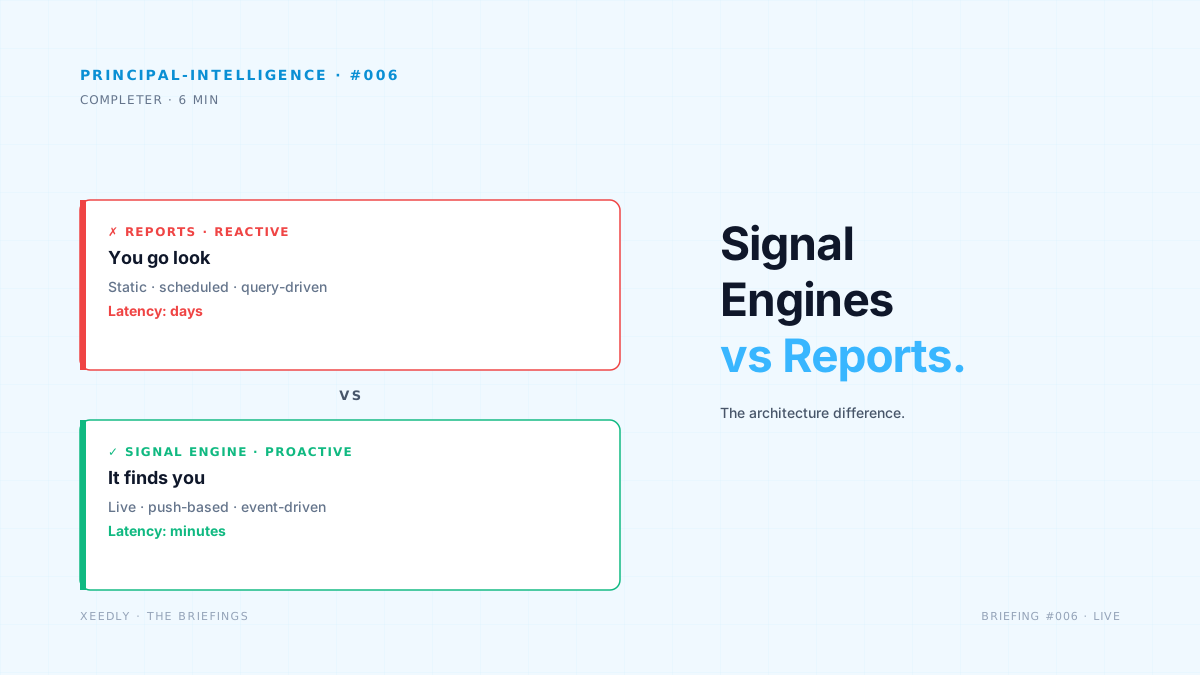
Signal Engines vs. Reports: The Architecture Difference
Reports are static documents you run. Signal engines are live systems that watch your business and tell you when something matters.
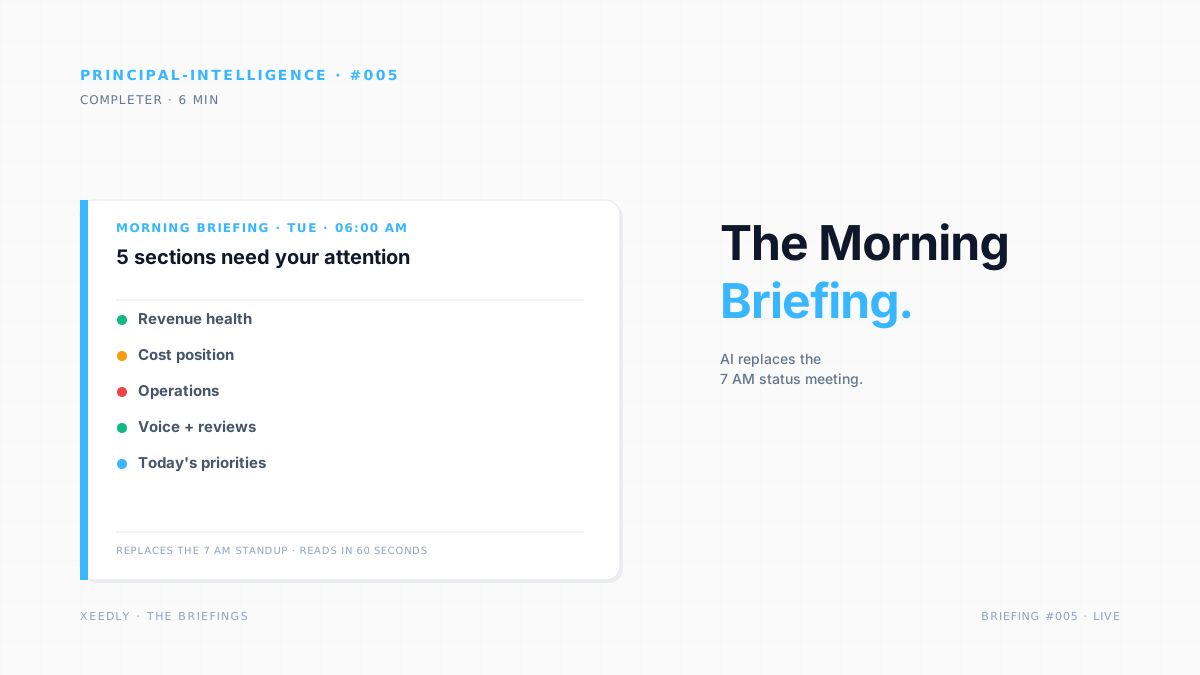
The Morning Briefing: How AI Replaces the 7am Status Meeting
The daily status meeting eats hours and surfaces stale information. AI morning briefings deliver the same intelligence in 60 seconds.
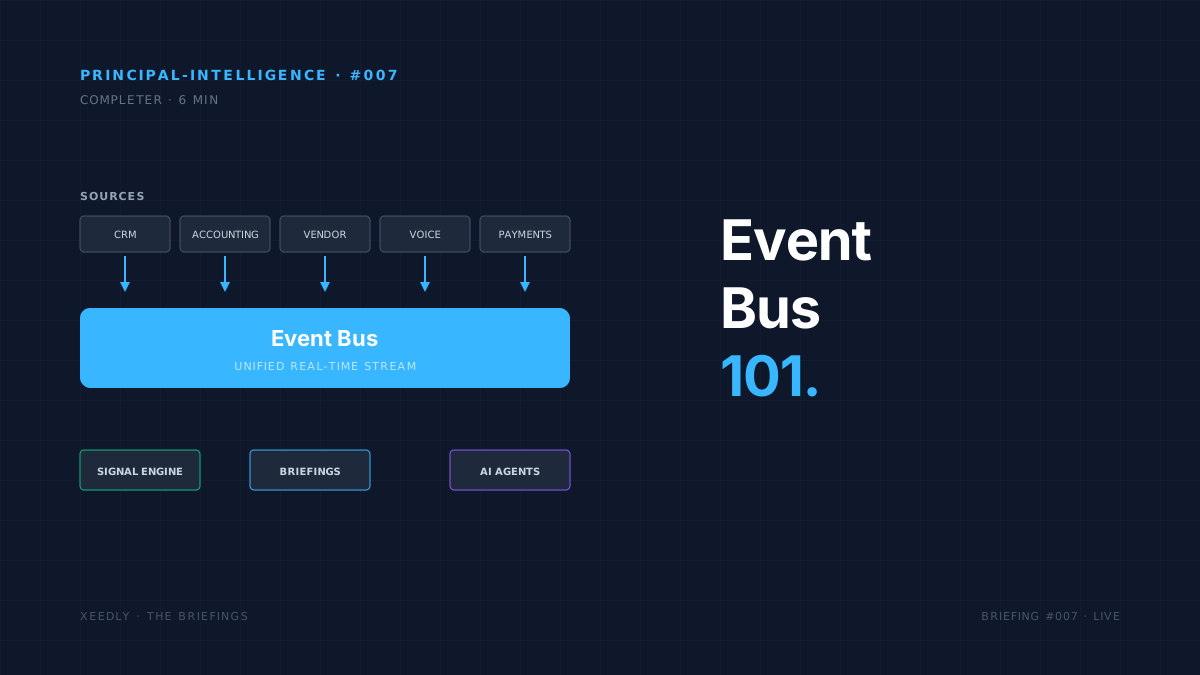
Event Bus 101: Why Every Operational Business Needs One
An event bus turns scattered operational data into a real-time stream. It's the foundation that separates intelligence platforms from dashboards.