
Why Success Doesn't Fix the Things You Hoped It Would

Success doesn't deliver the fulfillment most leaders expected because success isn't the variable that produces fulfillment. The variables are alignment (whether your daily actions serve what you actually want), presence (whether you have the margin to be in the moments that matter), and meaning (whether the work serves something beyond itself). Success can co-exist with all three or none of them. Most leaders accidentally build success that excludes them.
The Win That Doesn't Feel Like a Win
If you've been building something for years and you're starting to hit the milestones you set out to hit — the revenue number, the headcount, the exit, the recognition — and the feeling on the other side is hollow rather than full, you're not broken. You're noticing something important.
The fulfillment most leaders expect to find after success doesn't arrive because they're looking for it in the wrong place. Success was supposed to be the variable. It turns out success is the platform — the conditions for something else to happen — not the thing itself.
Success isn't a destination. It's a vehicle. The question is what you do with the vehicle once you have it — and whether the journey to get the vehicle left you with the capacity to use it well.
What Actually Produces Fulfillment
Three variables, in roughly this order:
1. Alignment
Whether your daily actions serve what you actually want. Most leaders' success comes from years of misaligned action — doing whatever the business demanded, deferring what they wanted, with the implicit promise that the alignment would come later. "Later" never arrives unless you build the architecture that creates it. (See the chain framework — Desire → Priorities → Decisions → Actions → Happiness.)
2. Presence
Whether you have the margin — calendar, attention, mental energy — to actually be in the moments that matter. A leader who succeeds and arrives at the trophy ceremony mentally exhausted, distracted by tomorrow's problems, unable to be present with the people they love — that leader has the success but lacks the presence to receive it. The win passes through them rather than landing.
3. Meaning
Whether the work serves something beyond itself. A business that exists to produce more business is hollow at the core. A business that exists to produce a life that serves family, faith, mission, or some larger purpose — that business gives back what it takes. The meaning isn't in the success metric; it's in what the success enables.
Why Most Leaders Get This Wrong
Most leaders aren't lying when they say they're chasing success for family, freedom, or meaning. They mean it. But they don't notice that the way they're building the success is excluding the very things it was supposed to enable.
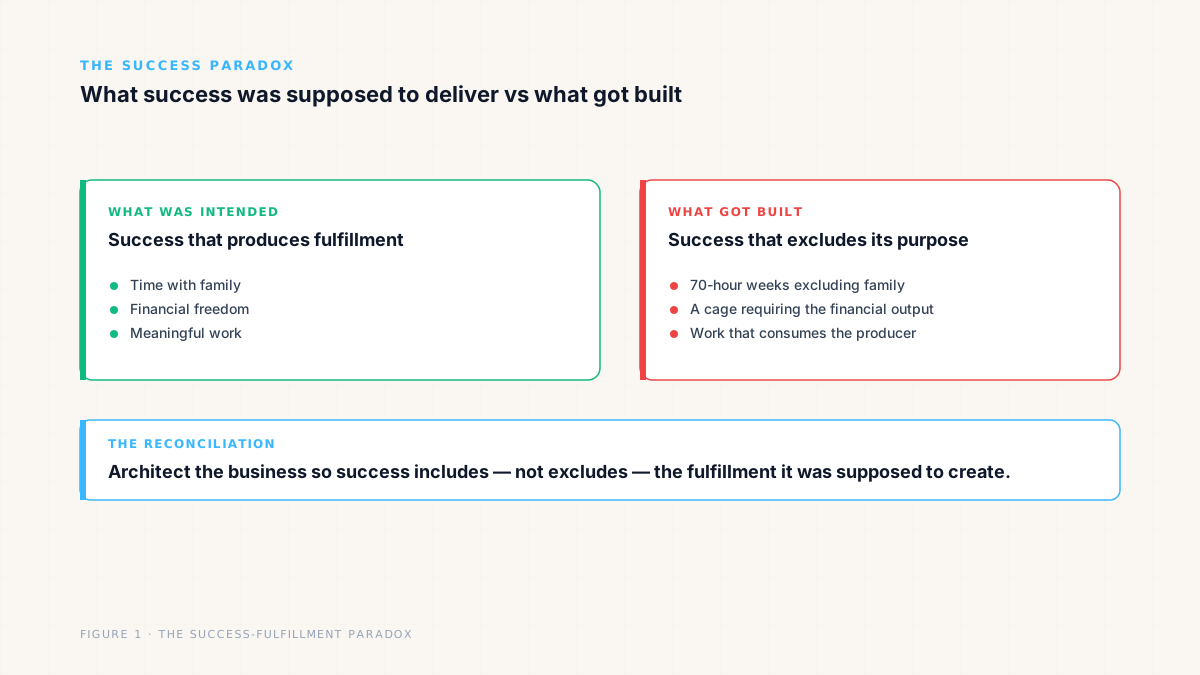
- Building toward family time by working 70-hour weeks that exclude family entirely
- Building toward financial freedom by living in a cage that requires the financial output to maintain
- Building toward meaningful work by building work that consumes the producer
- Building toward later without architecting any way for later to actually arrive
The architecture of how the success gets built either creates the conditions for fulfillment to be possible on the other side — or it actively prevents it. Most success-chasing models do the latter, by accident.
What Works Instead
Build success in a way that doesn't require excluding the things success was supposed to give you. Three architectural commitments:
- Architect the business so it doesn't require your constant presence. Intelligence layer, signal engine, codified standards — the structural pieces that let the business produce results without consuming the producer.
- Maintain alignment in real time, not at exit. Daily and weekly check-ins against the actual priorities you set out with — not the priorities the business has come to demand. If the chain has drifted, fix it now, not after the exit.
- Protect the moments while you build. Block family dinners. Make Sunday sacred. Show up to your kid's game without your phone. The success doesn't pay back the missed moments; they don't exist as currency.
When success is built in a way that includes — not excludes — the things that produce fulfillment, the success and the fulfillment arrive together. Not because the success is different, but because the architecture under it is.
Why This Matters for What XeedlyAI Builds
Xeedly exists because the architectural fix is real. When operational intelligence, signal engines, and codified standards remove the leader from the middle of every action, the business stops requiring exclusion of the things that produce fulfillment. The success can be built in a way that includes presence, alignment, and meaning — not in a way that defers them. Five live deployments across multi-unit restaurants, HOA management, property management, real estate investing, and the Xeedly platform itself.
Questions, answered.
- Why doesn't business success make most leaders happy?
- Success doesn't produce fulfillment because success isn't the variable that produces it. The variables are alignment (daily actions serving what you actually want), presence (margin to be in moments that matter), and meaning (work serving something beyond itself). Success can co-exist with all three or none. Most leaders build success that excludes them.
- Is success bad or unhelpful?
- No. Success is the platform — the conditions for fulfillment to be possible. The problem isn't success; it's building success in a way that simultaneously excludes the things success was supposed to enable. Architect it so the success includes presence, alignment, and meaning, and the success and fulfillment arrive together.
- What three variables actually produce fulfillment?
- Alignment (daily actions serving your actual priorities), presence (margin to be in moments that matter), and meaning (work serving something beyond itself). Most leaders chase success thinking it'll deliver all three; success can support them or exclude them depending on how it's built.
- How do most leaders accidentally build success that excludes them?
- Four common patterns: building toward family time with 70-hour weeks that exclude family entirely, building toward financial freedom by living in a cage that requires the financial output to maintain, building toward meaningful work by building work that consumes the producer, building toward 'later' without architecting any way for later to actually arrive.
- How do you build success differently?
- Three architectural commitments: architect the business so it doesn't require your constant presence (intelligence layer, signal engine, codified standards), maintain alignment in real time rather than waiting for exit, and protect the moments while you build (family dinners, Sundays, kids' games — without the phone). Success becomes a platform for fulfillment instead of a substitute for it.
Ask anything about this briefing.
I've read it. I can synthesize, expand on any section, or point you to related briefings.
Architect success that doesn't exclude you
If you've been building toward something and starting to wonder whether the fulfillment you expected will actually arrive — the architecture might be the answer, not the goal. Tell us about your business and we'll show you what the structural pieces would look like.
More from PRINCIPAL-LIFE
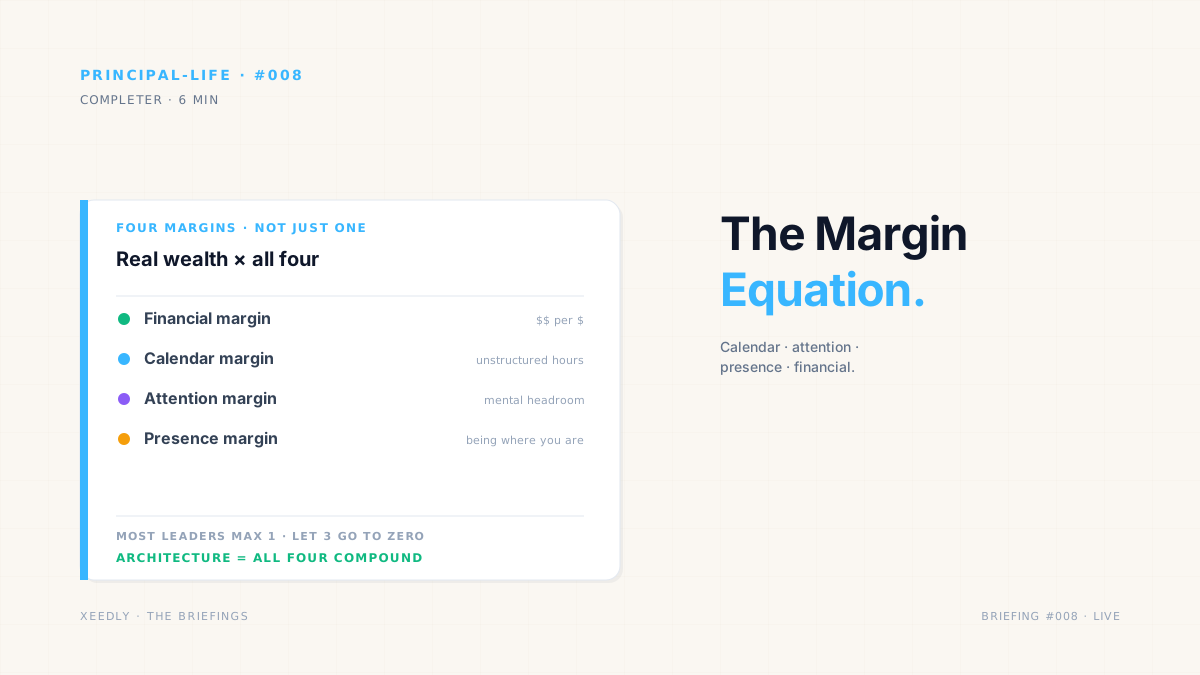
The Margin Equation: Calendar, Attention, Presence
Most leaders optimize for financial margin and ignore the three margins that actually determine quality of life.
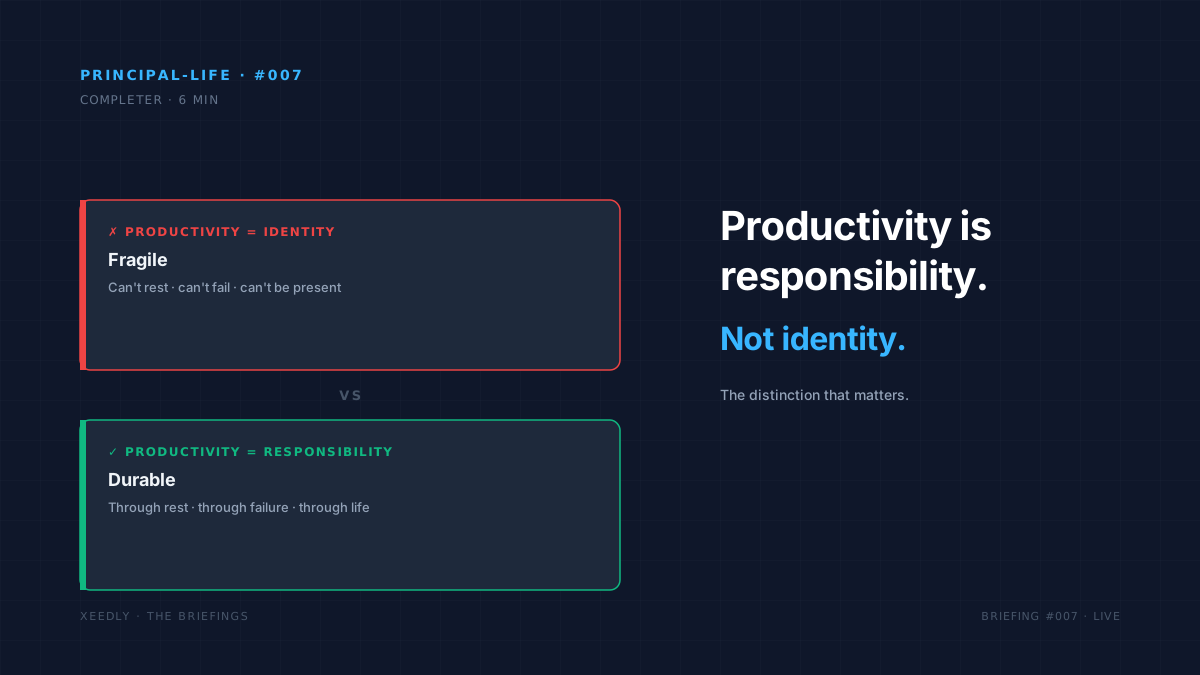
Productivity Is a Responsibility. But It's Not an Identity.
Most high-achieving leaders confuse being productive with being themselves. The conflation costs them when productivity inevitably hits a wall.
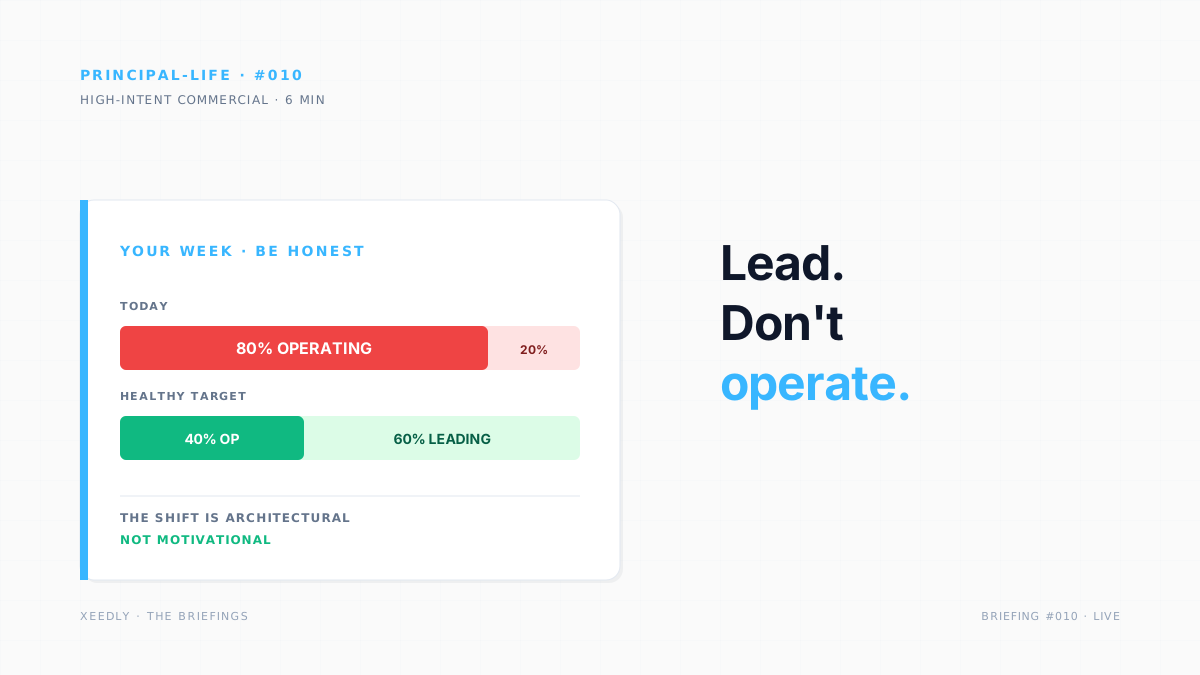
Leading vs. Operating: The Shift That Changes Everything
Most principals don't realize how much of their week is operating, not leading — and how that ratio predicts whether the business stays a cage or becomes a catalyst.