
Real Estate Investment Pipeline Intelligence: Beyond Deal Trackers

Real estate investment pipeline intelligence is a deal-aware system that captures every event in your sourcing and review pipeline, surfaces deals matching your investment thesis with confidence scoring, and routes the right opportunities to the right investors at the right time. Generic CRMs and deal trackers can't do this because they weren't built for investment thesis matching or lens-scored confidence — they were built for sales pipelines.
Why Generic Deal Trackers Fall Short
Most real estate investment firms run their deal pipeline on either a CRM (Salesforce, HubSpot) or a deal-tracking spreadsheet. Both work for the basic blocking and tackling — capturing leads, tracking stages, recording notes. Both fail at the work that actually drives investor returns.
Three places they fall short:
1. No investment thesis matching
A real investor doesn't want every deal — they want deals that fit their specific lens (cap rate range, geography, property type, hold horizon, equity profile). Generic CRMs treat every lead as equivalent. Investment-aware pipelines filter against the thesis automatically, surfacing only the deals worth reviewing.
2. No confidence scoring
Not every deal in the pipeline deserves equal attention. A deal with comparable transactions in the same neighborhood, a clean inspection report, and a motivated seller has different confidence than one with sparse comp data and an unmotivated seller. Confidence scoring (often AI-assisted) ranks deals by how likely they are to close — and at what value.
3. No agent-to-investor routing intelligence
A real estate investment firm typically sources deals through agents and routes them to investors based on lens fit. Generic CRMs make the routing manual — someone in the office decides who sees what. Pipeline intelligence automates the routing based on each investor's lens, so deals reach the right investor without principal-level coordination.
What Pipeline Intelligence Actually Includes
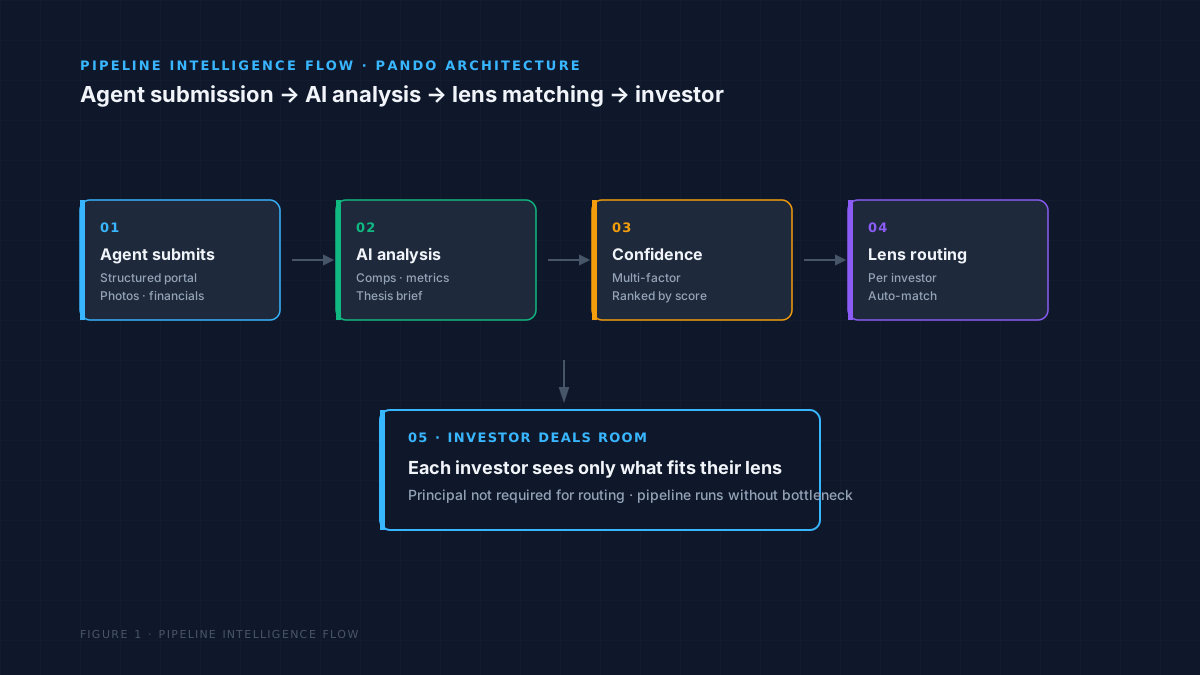
- Agent submission portal — agents submit deals with structured data (property details, financials, photos) rather than email PDFs
- AI-assisted deal analysis — the system pulls comps, calculates key metrics, generates a structured investment thesis brief
- Confidence scoring — multi-factor scoring (comp quality, deal stage, seller motivation, financial completeness) so principals know which deals deserve their attention first
- Lens-scored investor routing — each deal automatically matched against each investor's lens, surfacing fits and hiding noise
- Investor deals room — investors see only their qualified opportunities in a clean, decision-focused interface
- Pipeline signals — alerts when a deal's confidence changes, when investor activity suggests urgency, when comps shift
The Operating Difference for Principals
With pipeline intelligence in place, the principal stops being the routing engine. Agents submit. The system analyzes and scores. Deals route to the investors whose lens they fit. Investors see only what matches their criteria. The principal reviews the highest-confidence opportunities and the cross-investor patterns — not every single inbound deal.
Principal stops spending mornings triaging deal email. Investors stop seeing deals that don't fit their lens. Agents get faster, clearer feedback. The pipeline runs faster because the routing is automated, and the principal gets back to the work only they can do — relationships, strategy, hard calls.
When Pipeline Intelligence Pays Off
Pipeline intelligence makes sense when a real estate investment firm hits any of these inflection points:
- More than ~30 deals/month flowing through the pipeline
- More than 5 active investors with distinct investment criteria
- Deals routinely getting lost between agent submission and investor review
- The principal answering deal-quality questions that should resolve at the analyst level
- Investors complaining about irrelevant deals in their email
Below these thresholds, a good CRM and disciplined spreadsheet practice can usually carry the work. Above them, the pipeline becomes the bottleneck — and pipeline intelligence is the architectural fix.
How XeedlyAI Built Pipeline Intelligence for Pando
Pando Midwest Investments runs its full agent-to-investor deal pipeline on XeedlyAI's pipeline intelligence architecture. Agents submit deals through a structured portal. Admins review via a four-zone decision surface. AI generates a structured investment thesis per deal. Investors browse a deals room with lens-scored matching. Built across five Claude Code sessions, 13 database migrations, RSC-compliant Next.js 16. Live at ownpando.com. Same architectural pattern adaptable to any real estate investment firm.
Questions, answered.
- What is real estate pipeline intelligence?
- Pipeline intelligence is a deal-aware system that captures every event in your sourcing and review pipeline, scores deals against your investment thesis with confidence indicators, and routes opportunities to the right investors automatically. It's distinct from generic CRMs because it understands investment thesis matching and lens-scored confidence — not just sales stages.
- Why don't CRMs work for real estate investment pipelines?
- CRMs were built for sales pipelines, not investment pipelines. They lack investment thesis matching (filtering deals against a specific lens), confidence scoring (ranking deals by likelihood to close), and automated investor routing (matching deals to investor lenses). For real estate investment firms past ~30 deals/month and 5+ investors, generic CRMs become the bottleneck.
- What does AI-assisted deal analysis include?
- Comp pulling and calculation, key financial metric generation (cap rate, cash-on-cash, debt service coverage), structured investment thesis brief, risk flags from inspection or environmental data, and confidence scoring. Reduces the analyst time per deal from hours to minutes while producing more consistent output.
- When does pipeline intelligence make sense for a real estate firm?
- When the pipeline volume exceeds ~30 deals/month, you have 5+ active investors with distinct lenses, deals are routinely getting lost between agent submission and investor review, the principal is answering deal-quality questions that should resolve at the analyst level, or investors are complaining about irrelevant deals.
- Can we keep our existing CRM and add pipeline intelligence on top?
- Yes. Pipeline intelligence platforms can sit above or alongside existing CRMs, with the CRM continuing to handle generic contact management while the pipeline intelligence handles deal-specific scoring, routing, and investor matching. Most firms find this works better than trying to force-fit investment workflows into the CRM.
Ask anything about this briefing.
I've read it. I can synthesize, expand on any section, or point you to related briefings.
Build a pipeline your principal isn't the bottleneck for
Tell us about your current pipeline volume, investor count, and the gaps you're feeling. We'll map what pipeline intelligence would look like for your firm — and how it adapts from the Pando architecture.
More from MULTI-UNIT-OPS
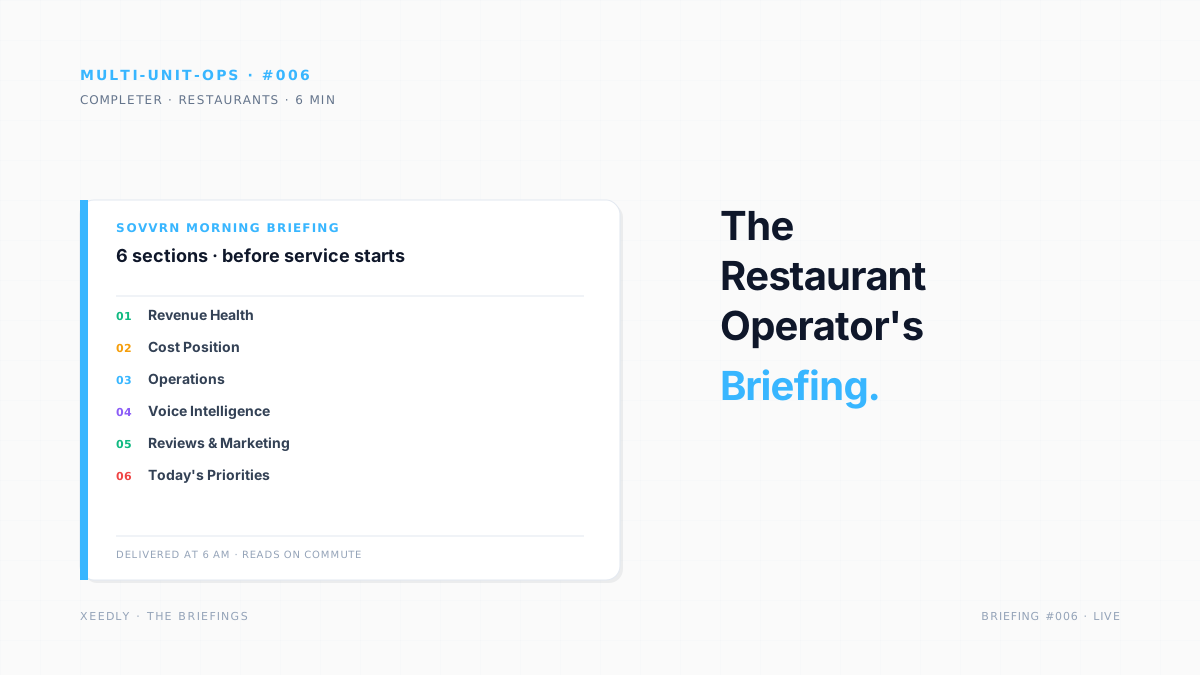
The Restaurant Operator's Morning Briefing: Six Sections That Matter
What multi-unit restaurant operators need at 6 AM before service starts. Six sections, prioritized by signal, delivered where they already work.
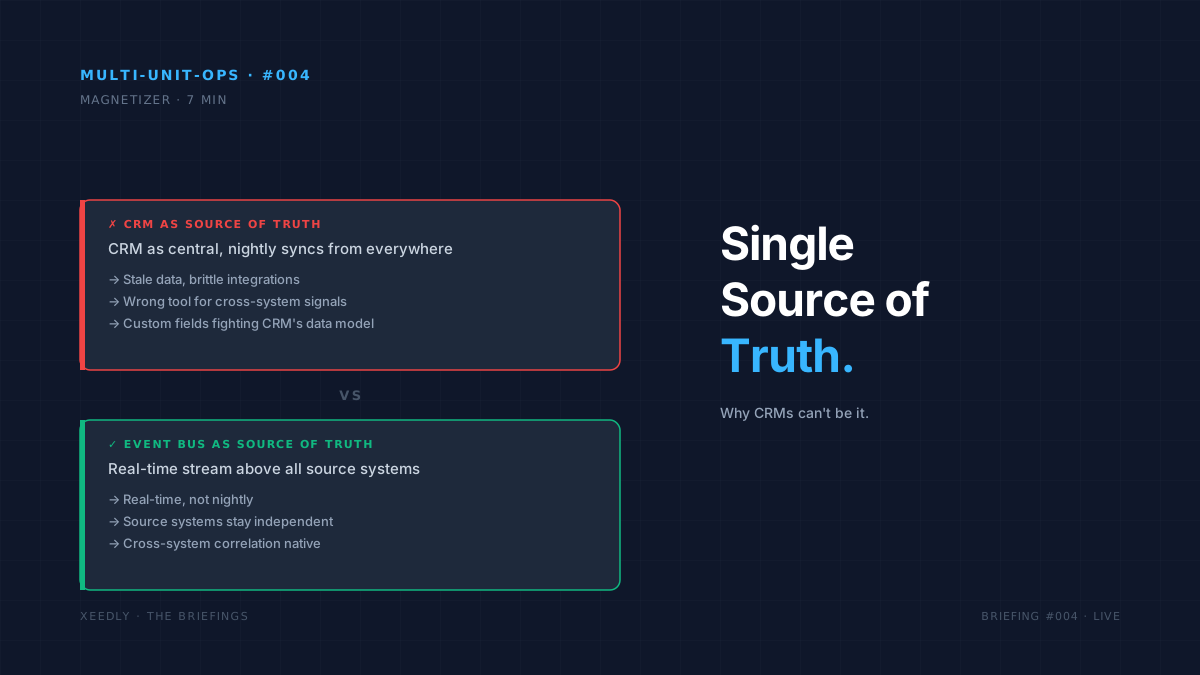
The Single Source of Truth Problem (And Why CRMs Don't Solve It)
Every operational business eventually wants a single source of truth. Most try to make their CRM that source. Most fail.
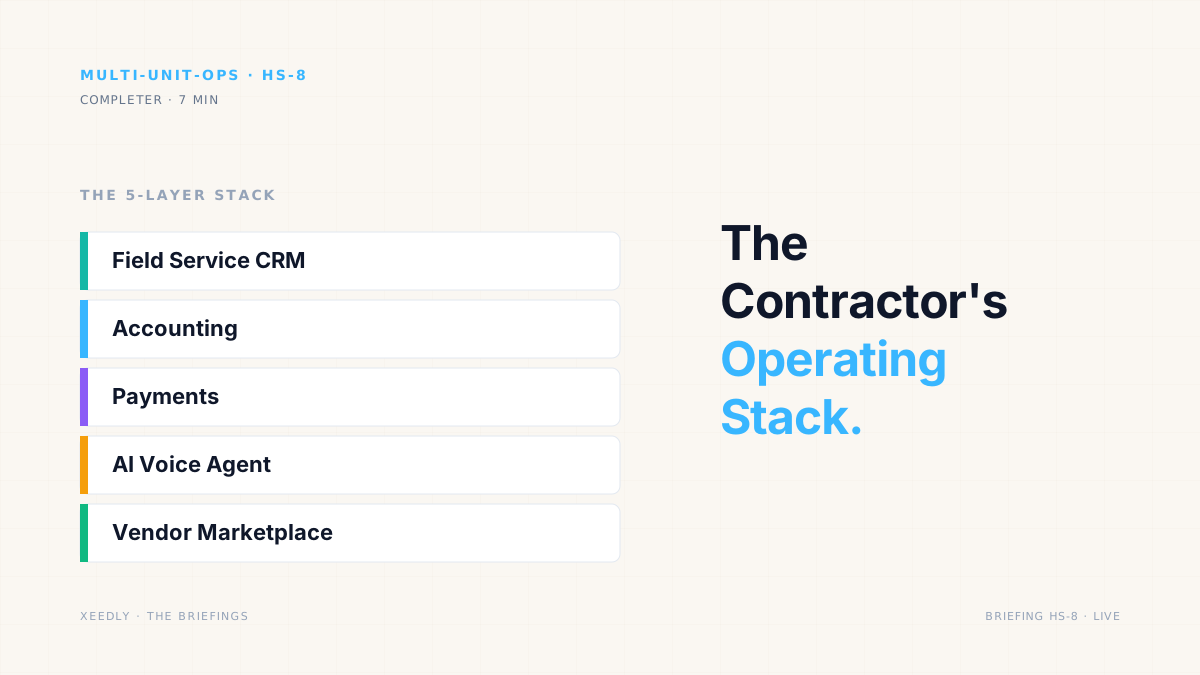
The Contractor's Operating Stack: What 12 Jobs a Week Actually Requires
Five tools, integrated into one workflow, capable of running a multi-crew home services business without the owner in the middle of every job.