The Single Source of Truth Problem (And Why CRMs Don't Solve It)
A single source of truth is a layer that captures every operationally meaningful event from every source system into one unified stream. CRMs can't be that layer because they're transactional databases optimized for their own workflows — not designed to absorb events from accounting, vendor management, payment platforms, voice systems, and the other tools that actually make up a business. The right architecture is an event bus sitting above the source systems, not one source system pretending to be all of them.
Why Every Multi-Unit Business Wants This
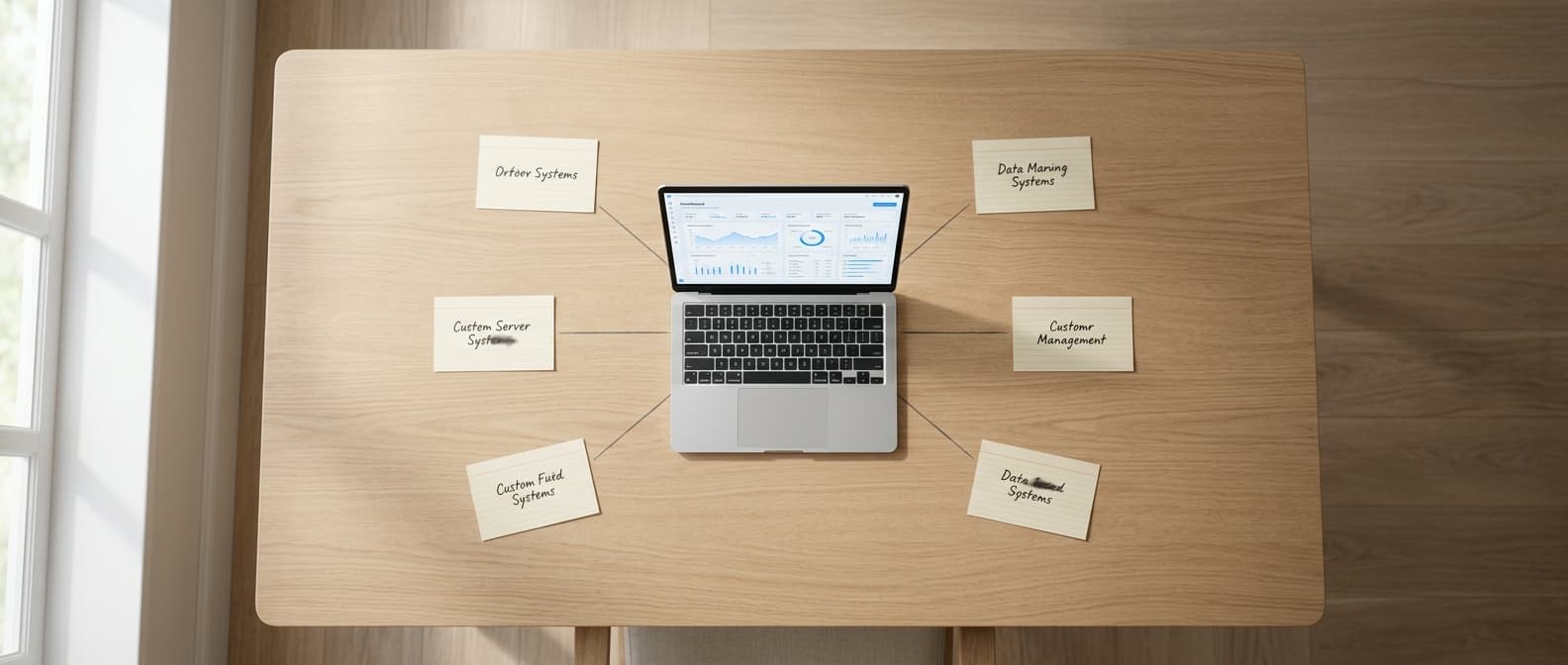
Past 3–5 units (or 5–10 employees, depending on the business), the same conversation happens in every operations meeting: 'we need a single place where I can see everything.' Customers in one tool, jobs in another, payments in a third, vendors in a fourth, calls in a fifth. The principal becomes the only person who can see across all of them — which makes the principal the bottleneck for every cross-functional decision.
The instinct is right. The execution usually fails.
Why Making the CRM the Source of Truth Doesn't Work
Most operational businesses try to solve this by picking the CRM as the central system and integrating everything else into it. Salesforce. HubSpot. Jobber. ServiceTitan. The idea: one login, one place, one source of truth.
Three structural reasons this fails:
1. The CRM has its own data model and workflows
Vendor compliance data doesn't fit naturally into customer relationship records. Phone call transcripts don't belong in deal stages. Property document status doesn't belong in opportunities. Forcing these into CRM custom fields creates a system that's bad at both jobs.
2. Integrations are brittle and one-directional
Most CRM integrations are nightly syncs that move data INTO the CRM. They're not real-time. They're not bidirectional. They break when source systems change. Six months in, the CRM has a stale partial copy of every other system's data — worse than no copy, because people trust it.
3. The CRM optimizes for sales workflows, not operations
Even when integrations work, the CRM's reporting and views were designed for sales pipelines, not operational signal detection. You end up with a giant pile of synced data and no architecture for cross-system correlation, anomaly detection, or push-delivery — the things you actually wanted in the first place.
What Actually Works
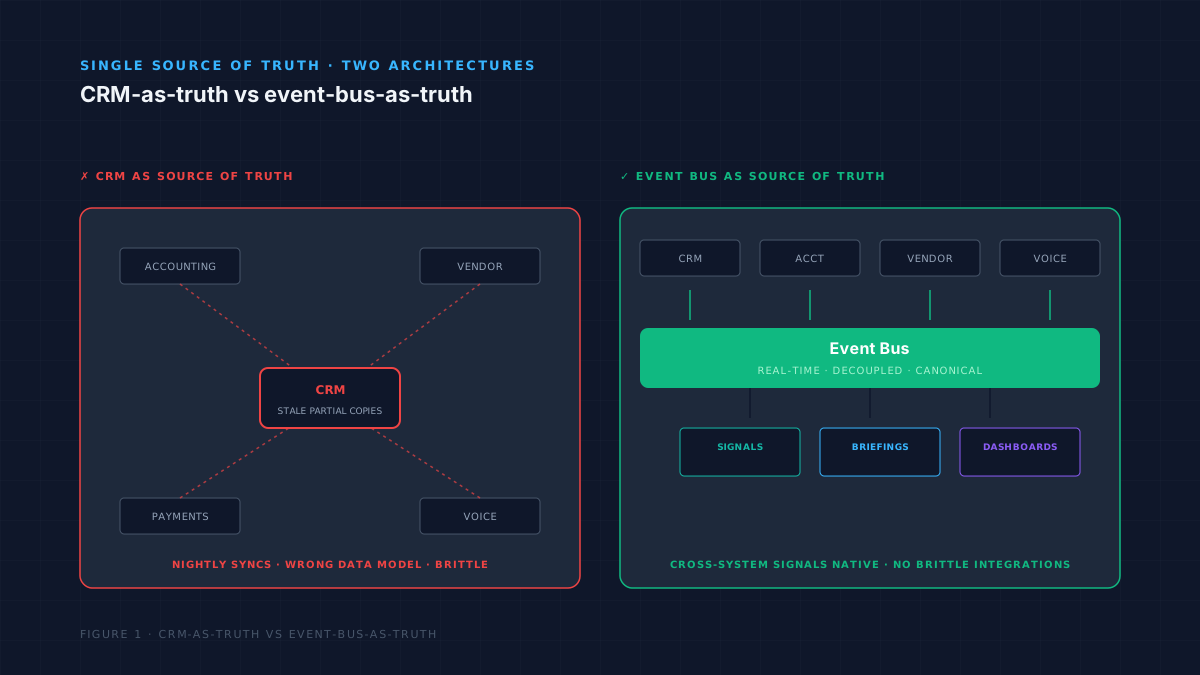
The architecture that actually works inverts the model. Instead of trying to make one source system the truth, build an event bus that captures every meaningful event from every source system into a unified real-time stream. Source systems stay independent — they just publish events as they happen. Consumers (signal engines, briefings, dashboards, AI agents, custom workflows) subscribe to the bus.
- Source systems stay independent. Your CRM stays a CRM. Your accounting stays accounting. Nothing has to know about anything else.
- Events arrive in real time. No nightly sync delays. No partial stale copies.
- Cross-system correlation is native. Once events from all systems are on one bus, correlating across them is just a query against one stream.
- Multiple consumers, no contention. Add a new signal engine, a new dashboard, a new AI agent — they all subscribe to the bus without touching source systems.
- Auditable history. Every event is recorded with timestamp. Full operational history is replayable.
Why Most BI Vendors Don't Sell This
Honest reason: most BI platforms make money on the data warehouse + dashboard model. Selling an event bus + intelligence layer requires a different architecture and a different go-to-market. The vendors who DO sell this — usually under names like 'operational intelligence' or 'event-driven analytics' — tend to be technical and enterprise-priced.
AI-assisted development has changed the cost equation. Custom event-bus deployments that would have cost $400K and 9 months in 2020 now run $5K–$25K and 2–4 weeks with a partner who's done it before. For most multi-unit operators, custom-build is now cheaper than enterprise BI licensing — and gets you the architecture you actually need.
What to Stop Doing Tomorrow Morning
- Stop trying to make the CRM the single source of truth. It's the wrong tool for the job. Keep the CRM doing what it does well; build a different layer for cross-system truth.
- Stop adding custom fields to systems to fit data they weren't designed for. Compliance docs don't go in CRM custom fields. Phone transcripts don't go in deal records. Each piece of data belongs in its native system; cross-system visibility belongs in an event bus above them.
- Stop relying on nightly ETL for real-time decisions. Anything that needs cross-system visibility same-day requires event-driven architecture, not warehouse queries.
- Start planning the event bus — even if you can't build it for another 6 months. Knowing it's the destination changes how you evaluate vendor purchases and integration decisions in the meantime.
How XeedlyAI Builds Event-Bus-Based Source of Truth
Every Xeedly intelligence platform deployment is event-bus-first. Source systems stay independent — CRM, accounting, payment, vendor management, voice — and publish events into the unified bus. Signal engines, briefings, and dashboards subscribe to that bus. Five live deployments across multi-unit restaurants, HOA management, property management, real estate investing, and the Xeedly platform itself. Standup is 2–4 weeks for the core bus plus 1–2 weeks per integration.
Questions, answered.
- What is a single source of truth in business operations?
- A single source of truth is a layer that captures every operationally meaningful event from every source system into one unified stream. Properly designed, it's where any consumer (signal engines, dashboards, AI agents, custom workflows) goes to see across the business — instead of querying each system separately.
- Why can't my CRM be the single source of truth?
- Three structural reasons: (1) the CRM has its own data model that doesn't fit non-CRM data well, (2) integrations are usually nightly syncs that go stale and break, and (3) the CRM's reporting was built for sales workflows, not cross-system operational signal detection. You end up with a partial stale copy of every other system's data in a tool that wasn't designed for it.
- What's the right architecture for a real single source of truth?
- An event bus that captures every meaningful event from every source system into a unified real-time stream. Source systems stay independent — they publish events as they happen. Consumers (signal engines, briefings, dashboards) subscribe to the bus. No system has to know about any other system.
- How long does it take to build an event-bus-based source of truth?
- Core event bus + canonical event schema: 2–4 weeks. Each source system integration: 1–2 weeks. Most operational businesses end up capturing 50–200 distinct event types across 5–15 source systems. AI-assisted development has compressed this from $400K/9-month enterprise projects to $5K–$25K/2–4-week custom deployments.
- Do I have to replace any of my existing tools to do this?
- No. The event bus sits ABOVE your existing tools, ingesting events via webhooks or API. Your CRM stays. Your accounting stays. Your operational tools stay. The bus adds cross-system visibility without forcing a rip-and-replace.
Ask anything about this briefing.
I've read it. I can synthesize, expand on any section, or point you to related briefings.
Build the truth layer your CRM can't be
Tell us which systems you're running and where you're feeling the visibility gap. We'll map an event-bus deployment for your operation and tell you which cross-system signals would emerge first.
More from MULTI-UNIT-OPS
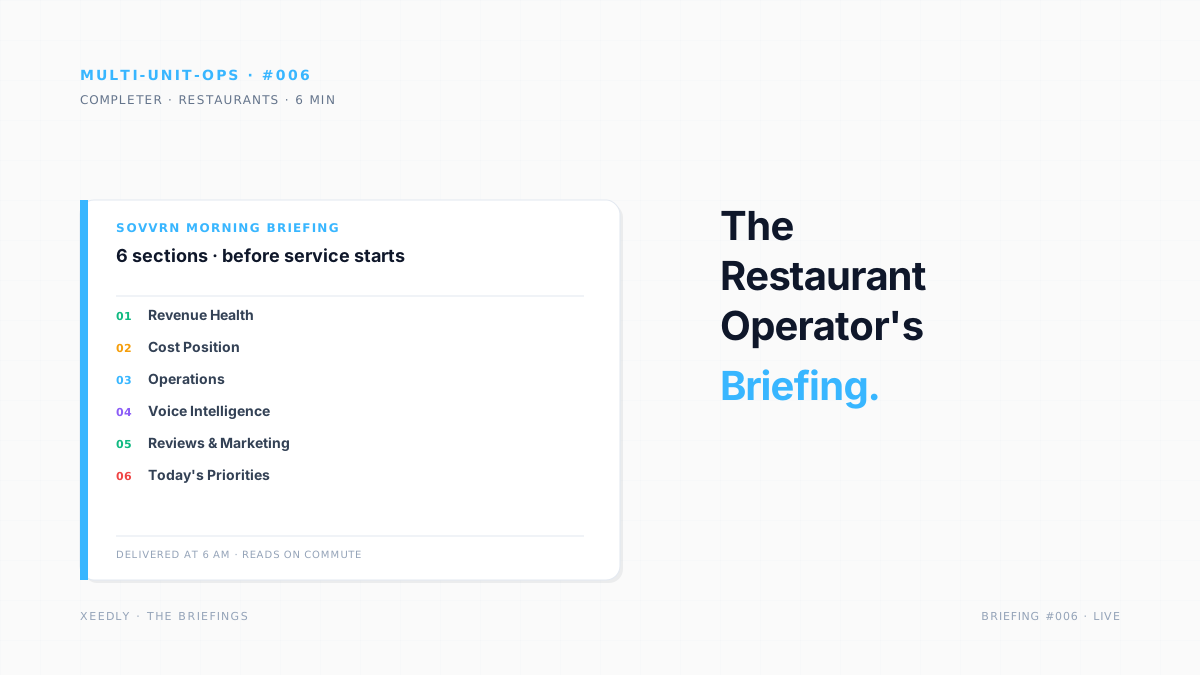
The Restaurant Operator's Morning Briefing: Six Sections That Matter
What multi-unit restaurant operators need at 6 AM before service starts. Six sections, prioritized by signal, delivered where they already work.
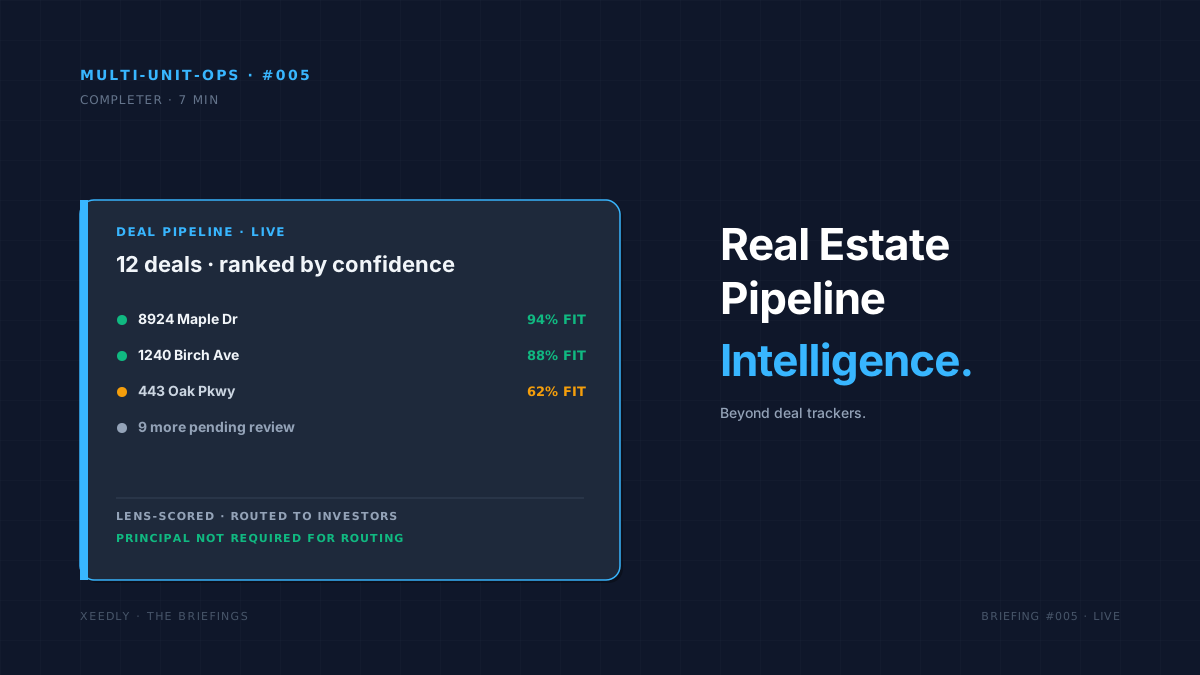
Real Estate Investment Pipeline Intelligence: Beyond Deal Trackers
Real estate investment principals run pipelines on tools that weren't built for deal-stage signal detection. Here's what fits how investors actually decide.
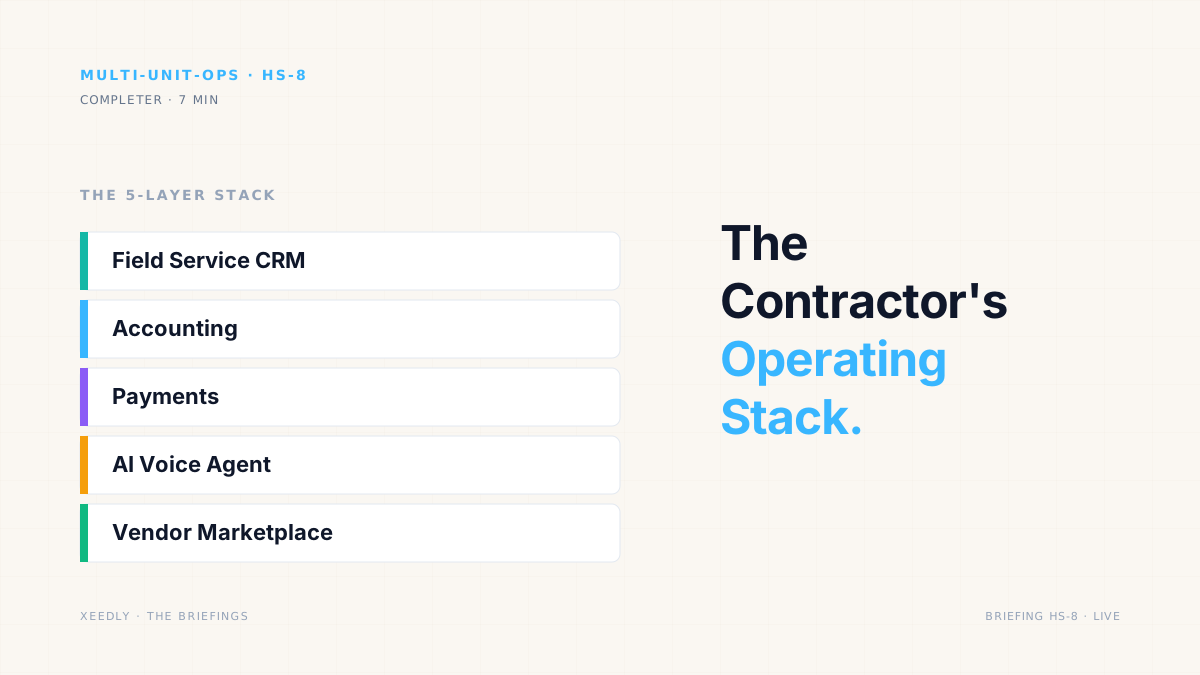
The Contractor's Operating Stack: What 12 Jobs a Week Actually Requires
Five tools, integrated into one workflow, capable of running a multi-crew home services business without the owner in the middle of every job.